Comic 01 · Published
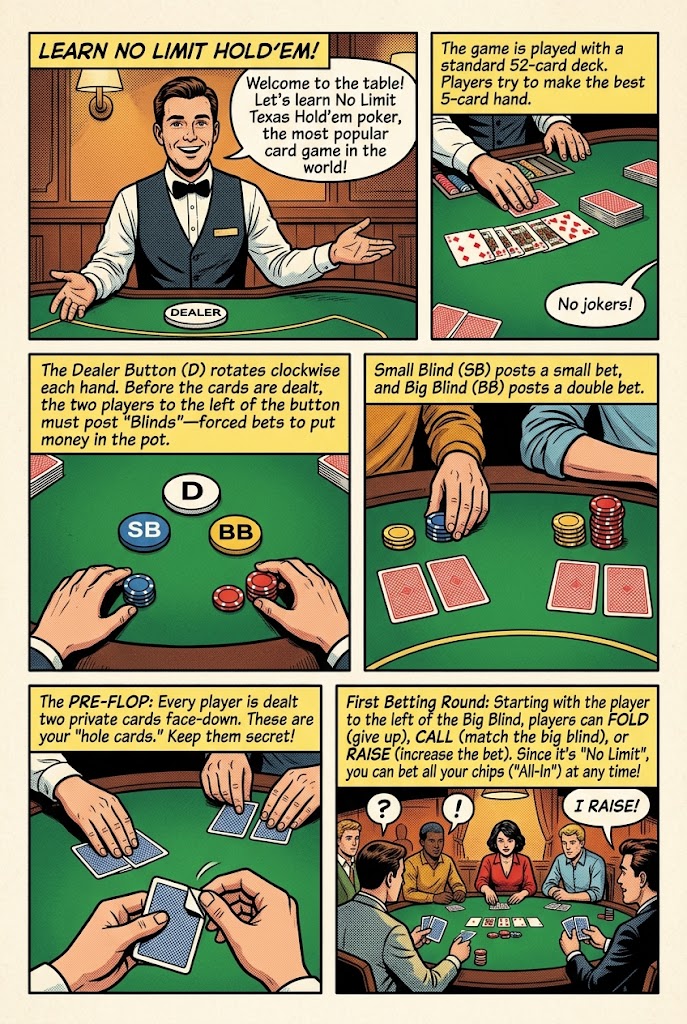
A six-panel welcome to the poker table: the deck, the dealer button, the blinds, your hole cards, and your first decision.
Read left to right, then down. The artwork simplifies a few rules; the notes and text version below add the details.
Text version
This accessible text version follows the six panels and includes the rules clarifications above.
Welcome to the table
A dealer introduces no-limit Texas Hold’em. This first comic covers setting up a hand and reaching the opening betting round.
A standard deck, no jokers
The game uses 52 cards. At showdown, compare the best five-card hands made from each player’s two hole cards and the five shared community cards. You may use both, one, or neither of your hole cards. You can also win earlier if every opponent folds.
The dealer button and blinds
The button marks the dealer position and normally moves clockwise between hands. With three or more players, the next two positions clockwise post the small blind and big blind before the deal. These forced bets start the pot. Live games can use a dead-button procedure when seats become empty.
Post the stated amounts
The small blind and big blind follow the game’s announced structure. A common example is 100/200: the small blind posts 100 chips and the big blind posts 200. Some games also have an ante, which is separate from the blinds.
Two private hole cards
Each player receives two cards face down. Keep them private while the hand is in progress. This stage, before the community cards, is called preflop.
The first betting round
With three or more players, preflop action begins with the first player clockwise after the big blind. On your turn, you may fold, call the amount you face using your available chips, or make a legal raise. If everyone only calls, the big blind may check or raise. Going all-in means committing your remaining chips, subject to the action and betting rules.
What comes next?
The flop brings three community cards, followed by the turn and river, with betting rounds in between when players can still bet. Follow a complete counted hand to see the sequence. For raises and all-ins, use the betting and pots guide.
Published by Nolan Kido. Artwork generated with Google Gemini; explanatory text prepared with AI assistance. The scene is fictional and does not depict a recorded hand. This is an introduction, not a complete rulebook. See rules and fair play for rule sources.