nolankido.comPractical AI · A life beyond the screen
Nolan Kido / Poker
Poker / Comic 05
Why acting last helps
Comic 05 · Published
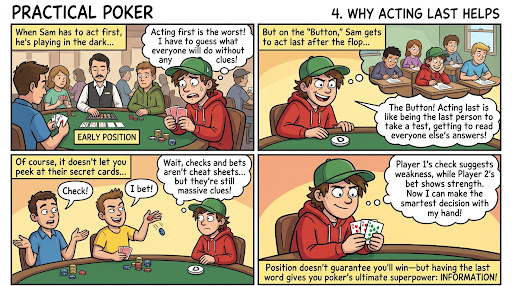
When you act after your opponents, you get to see their decisions before making yours. Sam discovers why position is useful, even when nobody can see anyone else’s cards.
In early position, Sam feels as though he is playing in the dark. He must decide before seeing what the players behind him will do.
A different view from the button
After the flop, Sam gets to act last on the button. He compares it to being the last person to take a test, after seeing everyone else’s answers.
Clues, not secret cards
Sam cannot peek at anyone’s hole cards. But he watches one player check and another bet, giving him information he did not have when acting first.
A better-informed decision
Sam weighs those actions before choosing his own. The closing lesson: position does not guarantee a win, but acting later gives you more information.
What can you do with that information?
Suppose you are on the button and two opponents check to you on the flop. You can check behind to end that betting round without adding chips, or bet. If an opponent bets before your turn, you must instead decide whether to fold, call or raise. You cannot check when facing an outstanding bet.
Published by Nolan Kido. Artwork generated with Google Gemini; explanatory text prepared with AI assistance. Sam’s scene is fictional.
Keep or share this page
Pass along this page, or keep its permanent link in your notes. Share page, where supported, sends only the public title and link, not calculator entries or worksheet answers.